Tai Chi Chuan is famous for its ability to develop superhuman levels of balance, calm and awareness. These qualities support unfathomable strength and vibrant health.
Ironically though, many of us cultivate an interest in Tai Chi, only after our natural strength and health are in decline.
These conditions make us a prime candidate for benefit. However, they also multiply the consequences of injury from any physical training.
Proper footwear is essential, to minimize risk and maximize the gains from Tai Chi practice. This guide will help you succeed.
Considerations
Surface Grip and Outsole Tread
Tai Chi routines include pivoting, spinning, and sliding movement. For our safety, these movements should be practiced on a flat, smooth, solid and level surface.
Uneven surfaces and high-traction soles create excessive friction. This results in a higher likelihood of injury to the knee, ankle or hip.
A proper Tai Chi shoe has shallow treads and minimal grip.
Toe Box Width
The natural shape of a human foot is wider at the toes, and narrower in the middle. Unfortunately, most athletic shoes are wider in the middle, and narrower in the toes. This disparity unbalances the entire kinetic chain, all the way up to the hands and head.
A wide toe box (such as is often found in “barefoot shoes”) will allow your entire foot to engage as intended, for superior balance and motor control.
High Versus Low Collars
In low-top, low-profile or low-collar shoes, the ankle is left uncovered. This allows for greater mobility.
High-top shoes and boots offer greater support, by covering and reinforcing the ankle joint. However, they also limit your movement in and out of Tai Chi stances.
Choose a low-top shoe that allows “plantar flexion,” or pointing the foot.
Sole Flexibility
Many Tai Chi forms explicitly bend and straighten the toes. For example, to push down or forward with the ball of the foot. A stiff sole will prevent these beneficial movements.
Heel Rise/Drop
“Heel drop” refers to a height difference between the heel and forefoot, resulting from the shape and thickness of the sole.
A small heel-to-toe drop is typical for athletic and dress shoes, whereas “zero drop” is more common in barefoot-style shoes.
Wearing heel-drop shoes is equivalent to standing on a permanent wedge. It affects your posture, weight distribution and movement in subtle ways. Negative effects may include reduced ankle flexibility and glute activation, and an excessive lumbar curve — all of which are detrimental for Tai Chi practice.
Arch Support
Arch support is a double-edged sword. It supports weak arches, but also it creates them.
The plain fact is, arch support insoles block sensory feedback, and inhibit the natural biomechanics of the foot. A healthy, well-functioning arch does not require any “support” in the middle.
Nevertheless, some people were born without healthy, well-functioning arches (e.g. “flat feet”). Others have grown accustomed to and dependent on this type of support, and cannot simply abandon it.
This complex topic is best addressed in consultation with your own health care professional.
Classroom Requirements
Dance or multipurpose studio owners commonly prohibit “outdoor shoes,” which inadvertently bring dirt and pebbles onto the practice floor. They may also disallow hard or rubber soles, which can leave dark streaks and scratches.
Shoes and Surfaces to Avoid
Grass, sand, gravel and rough concrete are not suitable practice areas, particularly for beginners. These uneven and high-friction surfaces are more likely to cause knee strain and injury.
Skateboard shoes are flat and often wide (positives), but also stiff, thick and heavy (negatives).
Bevel-soled gum shoes (e.g. Feiyue) are not recommended, for all the reasons listed above.
Our Recommendations
Shoes For Outdoor Tai Chi Practice
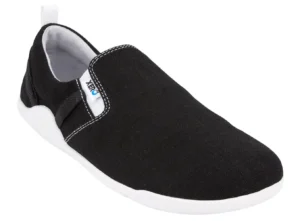
We recommend Xero Shoes. They feature a wide toe box, flexible outsoles, and removable insoles that allow you to adjust cushioning and arch support to your preference.
We also recommend Whitin and Hobibear barefoot shoes.
Shoes For Indoor Tai Chi Practice
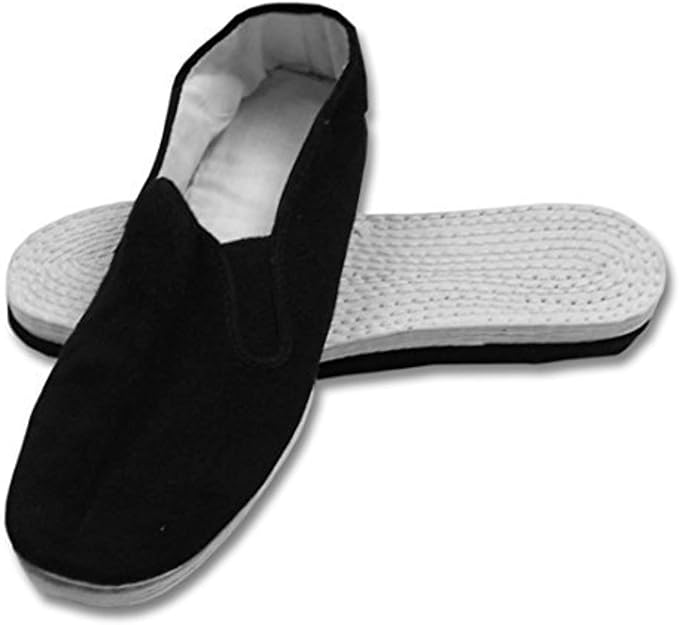
Option One: Cotton Sole Kung Fu Slippers
Simple and affordable. The cloth upper stretches to accommodate wider feet (but the sole will not).
Available from Amazon.
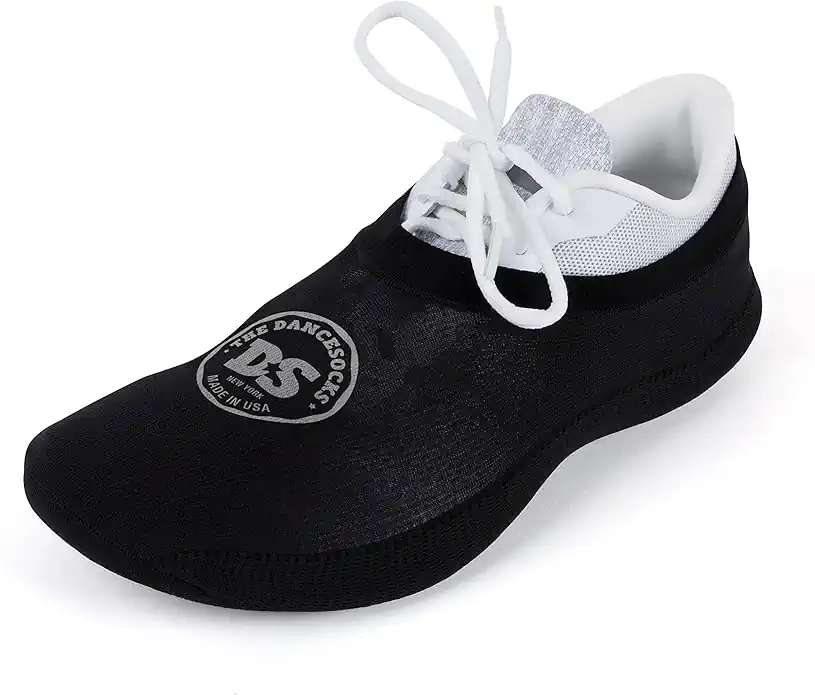
Option Two: Dance Socks
These thin socks fit over your existing sneakers, reducing friction, and improving your ability to twist and turn.
Available from Amazon.
Option Three: Regular Socks
Intermediate or advanced practitioners may favor this option. However, they could be too slippery for beginners, especially those with balance or flexibility issues.
Other Options
Some favor indoor soccer shoes, or sneakers created especially for martial arts training.
Barefoot Tai Chi Practice
Barefoot practice may be suitable on certain low-friction surfaces such as wood, tile, or thin carpet.
This article may contain affiliate links.